Short Introduction
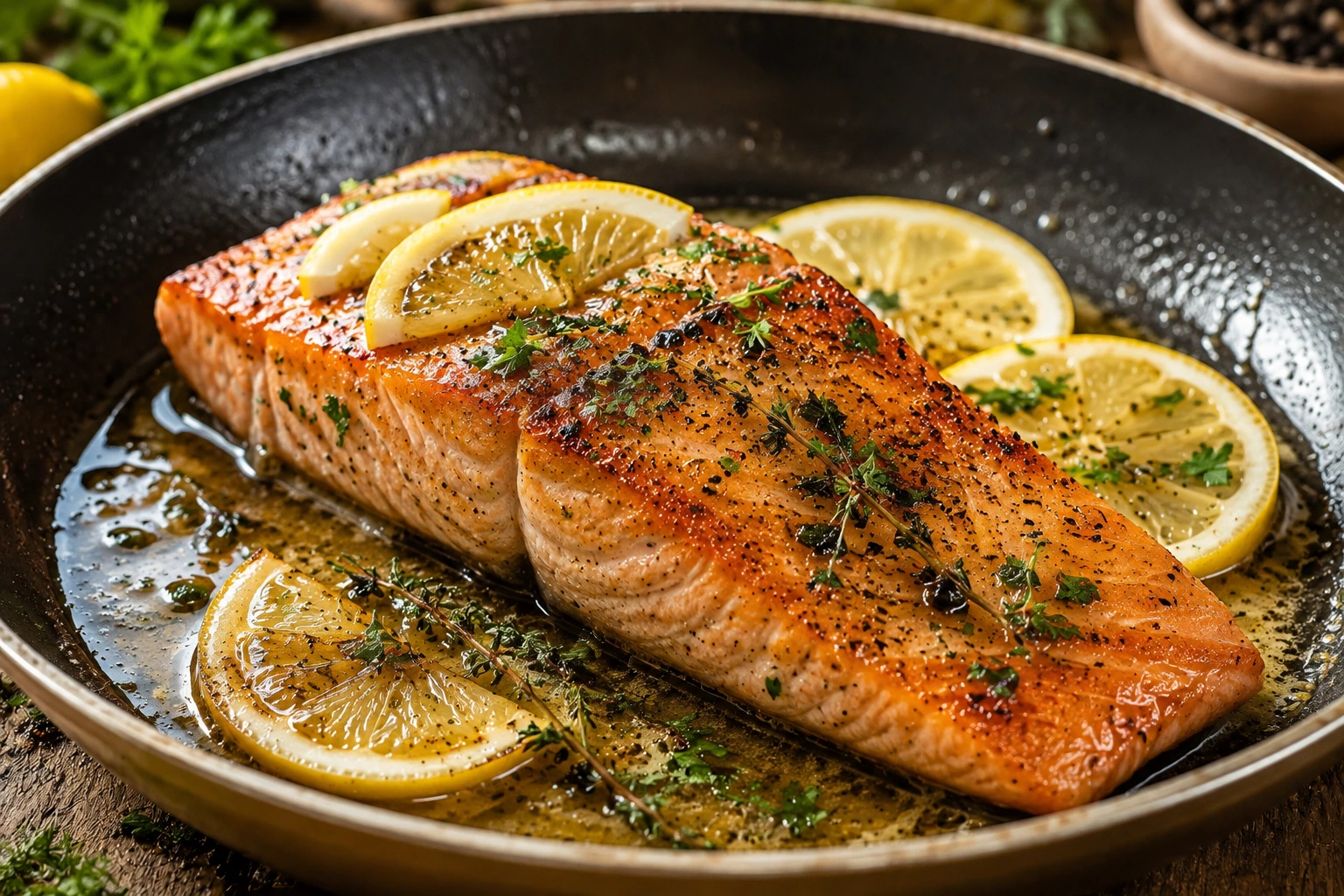
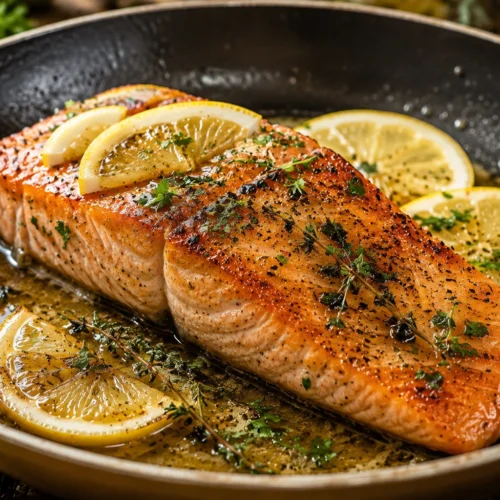
Pan-seared salmon has a reputation for being tricky, but it’s actually one of the fastest, most forgiving proteins you can cook once you understand a few basics. In under 20 minutes, you can have a piece of salmon with crispy, golden skin and a tender, flaky center.
What makes pan-seared salmon such a great dish for beginners is that it requires very few ingredients and almost no advanced technique. You’re not building a complicated sauce or juggling multiple pans. It’s really just heat, timing, and a good hot skillet doing most of the work.
I’ve cooked salmon countless times over the years, both in professional kitchens and simple home dinners, and the method barely changes no matter the setting. In this article, I’ll walk you through exactly how to pan-sear salmon so it turns out perfectly crisp on the outside and tender on the inside, every single time.
Quick Recipe Overview
Pan-Seared Salmon
Ingredients
- 4 salmon fillets (about 6 oz each), skin-on
- 2 tablespoons olive oil (or avocado oil, which handles high heat well)
- Salt and black pepper, to taste
- 2 tablespoons unsalted butter
- 2 garlic cloves, smashed
- 1 sprig fresh thyme or rosemary (optional)
- 1 lemon, cut into wedges, for serving
Kitchen Equipment
Here’s what you’ll need on hand:
- Large heavy-bottomed skillet (cast iron or stainless steel work best)
- Fish spatula or regular thin spatula
- Paper towels
- Meat thermometer
- Tongs
Step-by-Step Instructions
Dry the salmon
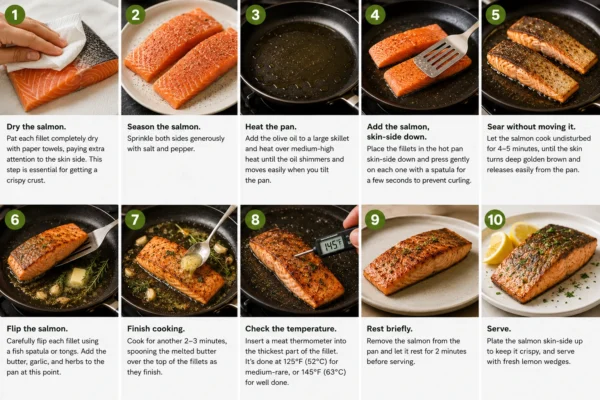
Pat each fillet completely dry with paper towels, paying extra attention to the skin side. This step is essential for getting a crispy crust.
Season the salmon
Sprinkle both sides generously with salt and pepper.
Heat the pan
Add the olive oil to a large skillet and heat over medium-high heat until the oil shimmers and moves easily when you tilt the pan.
Add the salmon, skin-side down
Place the fillets in the hot pan skin-side down and press gently on each one with a spatula for a few seconds to prevent curling.
Sear without moving it
Let the salmon cook undisturbed for 4–5 minutes, until the skin turns deep golden brown and releases easily from the pan.
Flip the salmon
Carefully flip each fillet using a fish spatula or tongs. Add the butter, garlic, and herbs to the pan at this point.
Finish cooking
Cook for another 2–3 minutes, spooning the melted butter over the top of the fillets as they finish.
Check the temperature
Insert a meat thermometer into the thickest part of the fillet. It’s done at 125°F (52°C) for medium-rare, or 145°F (63°C) for well done.
Rest briefly
Remove the salmon from the pan and let it rest for 2 minutes before serving.
Serve
Plate the salmon skin-side up to keep it crispy, and serve with fresh lemon wedges.
Chef’s Tips
- Make sure the salmon is completely dry before it hits the pan—any extra moisture creates steam that prevents the skin from crisping properly.
- Resist the urge to move the salmon around while it sears. Constant flipping or shifting is one of the biggest reasons the skin doesn’t crisp up.
- Use a heavy-bottomed skillet, since it holds heat more evenly than a thin, lightweight pan.
- A meat thermometer takes the guesswork out of doneness, especially since salmon can go from perfectly cooked to dry in just a minute or two.
Common Mistakes to Avoid
- Skipping the drying step: Wet salmon skin steams instead of crisping, leaving you with a soggy, rubbery texture.
- Flipping the salmon too early: The skin needs time to develop a proper crust before it will release cleanly from the pan.
- Using a pan that isn’t hot enough: This leads to salmon that sticks and skin that turns pale instead of golden brown.
- Overcooking the salmon: Since it cooks quickly, even an extra minute or two can dry it out significantly.
- Cooking salmon straight from the fridge: Letting it sit at room temperature for about 10 minutes beforehand helps it cook more evenly.
Variations
- Garlic butter salmon: Double the garlic and butter for an extra-rich, savory finish.
- Lemon-herb salmon: Add lemon zest to the seasoning and finish with fresh dill or parsley.
- Spicy salmon: Add a pinch of cayenne or smoked paprika to the seasoning for some heat.
- Honey glazed salmon: Brush a small amount of honey over the fillets during the last minute of cooking for a touch of sweetness.
- Blackened salmon: Use a blackening seasoning blend instead of plain salt and pepper for a bolder, spicier crust.
Storage Tips
Cooked salmon keeps well in an airtight container in the refrigerator for up to 3 days. For longer storage, freeze the cooked, cooled salmon in a freezer-safe bag for up to 2 months. To reheat, warm it gently in a skillet over low heat or in a 275°F oven for about 10 minutes to avoid drying it out. Avoid microwaving if possible, since it tends to make the texture rubbery.
Serving Suggestions
Pan-seared salmon pairs beautifully with a simple side of roasted asparagus or sautéed green beans. Rice pilaf, mashed potatoes, or a light quinoa salad all work well as a heartier side. For drinks, a crisp white wine like Sauvignon Blanc or a light Pinot Noir complements the richness of the salmon nicely, while sparkling water with lemon makes a great non-alcoholic option. A drizzle of the leftover garlic butter from the pan adds extra flavor when serving.
Nutritional Information
| Nutrient | Amount per Serving |
|---|---|
| Calories | approx. 350 kcal |
| Protein | 34 g |
| Carbohydrates | 1 g |
| Fat | 23 g |
| Fiber | 0 g |
Conclusion
Pan-seared salmon proves that a restaurant-quality dinner doesn’t require complicated technique, just a hot pan, a dry fillet, and a little patience while it sears. With crispy skin on the outside and a tender, flaky center, this dish comes together in well under 20 minutes, making it a fantastic option for anyone building confidence in the kitchen.
Give this pan-seared salmon recipe a try at your next dinner, and let me know in the comments how it turned out for you!
Frequently Asked Questions (FAQ)
Why won’t my salmon skin get crispy?
The most common reason is excess moisture on the skin before cooking, which creates steam and prevents proper browning. Make sure to pat the salmon completely dry with paper towels, use a hot enough pan, and avoid moving the fillets around while they sear, since constant movement disrupts the crust from forming.
Should I cook salmon skin-side up or skin-side down first?
Always start skin-side down first. This protects the delicate flesh from direct high heat while allowing the skin to crisp up properly. Once the skin releases easily from the pan and turns golden brown, flip the salmon to finish cooking the other side for just a couple of minutes.
How do I know when pan-seared salmon is done?
The most reliable way is using a meat thermometer inserted into the thickest part of the fillet. For medium-rare, look for 125°F, and for well-done, aim for 145°F. Salmon should flake easily with a fork but still look moist, not dry, when it’s properly cooked.
Can I pan-sear frozen salmon?
It’s best to thaw salmon completely in the refrigerator overnight before pan-searing for the most even cooking and crispiest skin. Cooking from frozen often leads to uneven results, with the outside overcooking before the inside reaches the right temperature, so thawing first is strongly recommended.
How did your pan-seared salmon turn out? Leave a comment below with your experience, and share this recipe with anyone looking for a quick, foolproof way to cook salmon at home!