Short Introduction
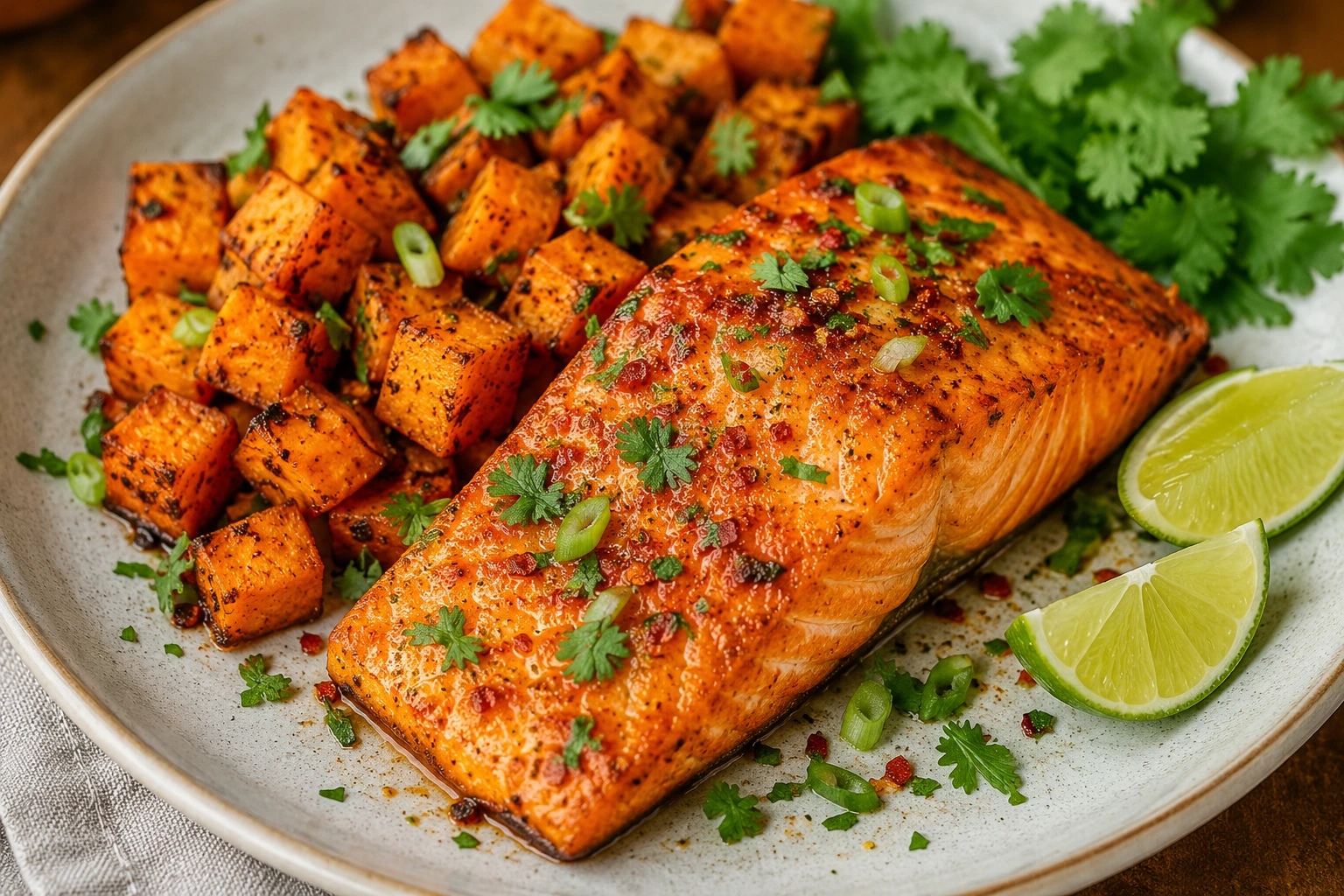
Red curry-roasted salmon and sweet potatoes is one of those dinners that feels far more exciting than the effort it takes to make it. A rich red curry paste mixed with coconut milk coats both the salmon and sweet potatoes, and the oven takes care of the rest while you relax.
This dish is especially great for beginners because everything roasts together on a single sheet pan. There’s no juggling multiple pots, no delicate sauce that can break, and very little cleanup involved. You just toss, coat, and roast.
I’ve made countless versions of roasted salmon dinners over the years, and this red curry variation has become one of my favorite ways to introduce bold, unexpected flavor without adding complexity. In this article, I’ll walk you through exactly how to make red curry-roasted salmon and sweet potatoes from start to finish.
Quick Recipe Overview
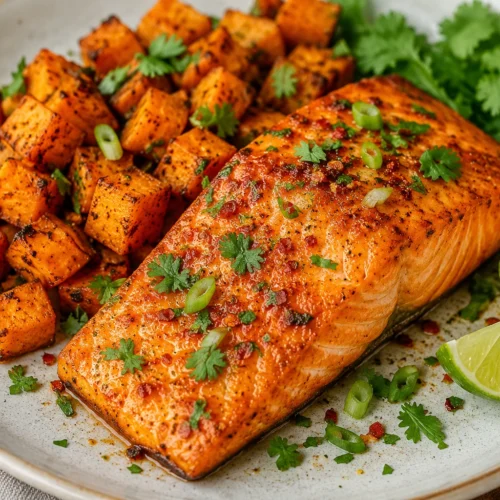
Red Curry–Roasted Salmon and Sweet Potatoes
Ingredients
- 4 salmon fillets (about 6 oz each), skin-on or skinless
- 2 medium sweet potatoes, peeled and cut into 1-inch cubes
- 3 tablespoons red curry paste
- 1/2 cup full-fat coconut milk
- 2 tablespoons olive oil, divided
- 1 tablespoon fish sauce (optional, for extra depth)
- 1 tablespoon brown sugar or honey
- 1 lime, juiced, plus extra wedges for serving
- Salt, to taste
- Fresh cilantro, chopped, for garnish
- 2 green onions, thinly sliced, for garnish
Kitchen Equipment
Here’s what you’ll need on hand:
- Large rimmed baking sheet
- Parchment paper or foil (for easy cleanup)
- Mixing bowl
- Whisk
- Meat thermometer
- Cutting board and knife
Step-by-Step Instructions
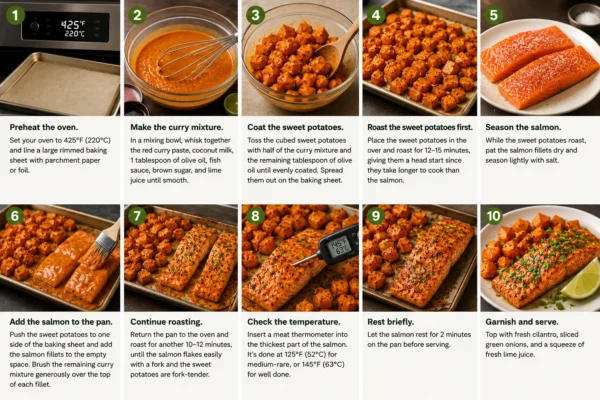
Preheat the oven
Set your oven to 425°F (220°C) and line a large rimmed baking sheet with parchment paper or foil.
Make the curry mixture
In a mixing bowl, whisk together the red curry paste, coconut milk, 1 tablespoon of olive oil, fish sauce, brown sugar, and lime juice until smooth.
Coat the sweet potatoes
Toss the cubed sweet potatoes with half of the curry mixture and the remaining tablespoon of olive oil until evenly coated. Spread them out on the baking sheet.
Roast the sweet potatoes first
Place the sweet potatoes in the oven and roast for 12–15 minutes, giving them a head start since they take longer to cook than the salmon.
Season the salmon
While the sweet potatoes roast, pat the salmon fillets dry and season lightly with salt.
Add the salmon to the pan
Push the sweet potatoes to one side of the baking sheet and add the salmon fillets to the empty space. Brush the remaining curry mixture generously over the top of each fillet.
Continue roasting
Return the pan to the oven and roast for another 10–12 minutes, until the salmon flakes easily with a fork and the sweet potatoes are fork-tender.
Check the temperature
Insert a meat thermometer into the thickest part of the salmon. It’s done at 125°F (52°C) for medium-rare, or 145°F (63°C) for well done.
Rest briefly
Let the salmon rest for 2 minutes on the pan before serving.
Garnish and serve
Top with fresh cilantro, sliced green onions, and a squeeze of fresh lime juice.
Chef’s Tips
- Give the sweet potatoes a head start in the oven, since they need more time to become tender than the salmon does to cook through.
- Cut the sweet potatoes into evenly sized cubes so they roast at the same rate and avoid some pieces being underdone while others overcook.
- Full-fat coconut milk gives the sauce a richer, creamier consistency than light coconut milk, which can taste watery in comparison.
- Brush extra curry mixture over the salmon halfway through roasting if you want an even bolder flavor and a slightly caramelized finish.
Common Mistakes to Avoid
- Adding the salmon and sweet potatoes to the oven at the same time: Sweet potatoes take longer to cook, so starting them together often leads to overcooked salmon or undercooked potatoes.
- Cutting the sweet potatoes into uneven pieces: This causes inconsistent cooking, with smaller pieces burning before larger ones soften.
- Using light coconut milk: It results in a thinner, less flavorful sauce compared to full-fat coconut milk.
- Overcooking the salmon: Since it cooks quickly, keep an eye on it during the final few minutes to avoid drying it out.
- Skipping the fresh lime juice at the end: This step brightens the entire dish and balances the richness of the curry and coconut milk.
Variations
- Spicier version: Add an extra tablespoon of red curry paste or a pinch of crushed red pepper flakes for more heat.
- Vegetable-forward version: Add broccoli florets or snap peas to the pan during the last 10 minutes of roasting.
- Shrimp version: Swap the salmon for large shrimp, adjusting the cooking time to about 6–8 minutes since shrimp cook much faster.
- Coconut rice pairing: Serve the dish over coconut-infused jasmine rice for an even more tropical, cohesive meal.
- Milder version: Reduce the curry paste to 2 tablespoons and add an extra splash of coconut milk for a gentler flavor.
Storage Tips
Red curry-roasted salmon and sweet potatoes keep well in an airtight container in the refrigerator for up to 3 days. For longer storage, freeze the cooked salmon and sweet potatoes separately in freezer-safe containers for up to 2 months, since sweet potatoes tend to hold their texture better when frozen apart from the fish. To reheat, warm gently in a 300°F oven for about 10–15 minutes, or use short intervals in the microwave to avoid drying out the salmon.
Serving Suggestions
Red curry-roasted salmon and sweet potatoes pairs wonderfully with steamed jasmine rice or coconut rice to soak up the extra sauce. A simple cucumber salad with rice vinegar adds a refreshing, cooling contrast to the bold curry flavors. For drinks, a chilled Riesling or Gewürztraminer complements the dish’s spice nicely, while iced Thai tea or sparkling water with lime works well as a non-alcoholic option. Extra lime wedges on the side let everyone adjust the brightness to their taste.
Nutritional Information
| Nutrient | Amount per Serving |
|---|---|
| Calories | approx. 480 kcal |
| Protein | 33 g |
| Carbohydrates | 28 g |
| Fat | 26 g |
| Fiber | 5 g |
Conclusion
Red curry-roasted salmon and sweet potatoes shows just how much bold, exciting flavor you can get from one sheet pan and a handful of ingredients. With a little attention to timing between the sweet potatoes and salmon, this dish comes together easily and tastes like something you’d order at a favorite restaurant.
Give this red curry-roasted salmon and sweet potatoes recipe a try at your next dinner, and let me know in the comments how it turned out for you!
Frequently Asked Questions (FAQ)
Can I use a different curry paste for this recipe?
Yes, while red curry paste gives this dish its signature flavor, yellow or green curry paste can be used as a substitute if that’s what you have on hand. Keep in mind that green curry paste tends to be spicier, so you may want to start with a smaller amount and adjust to taste.
Why do the sweet potatoes go into the oven before the salmon?
Sweet potatoes take longer to become tender than salmon takes to cook through, so giving them a head start ensures both components finish at roughly the same time. Adding everything to the oven simultaneously often results in undercooked potatoes or overcooked, dry salmon.
Can I make this dish without fish sauce?
Absolutely. Fish sauce adds a subtle depth of umami flavor, but it’s optional and can be left out entirely if you don’t have it or prefer to skip it. The dish will still taste rich and flavorful thanks to the red curry paste and coconut milk.
What can I substitute for coconut milk in this recipe?
If you need a substitute, unsweetened cashew cream or a light cream can work in a pinch, though the flavor will be noticeably different from traditional coconut milk. For the most authentic result and creamiest texture, full-fat coconut milk remains the best choice for this dish.
How did your red curry-roasted salmon and sweet potatoes turn out? Leave a comment below with your experience, and share this recipe with anyone looking for a bold, easy one-pan dinner!