Short Introduction
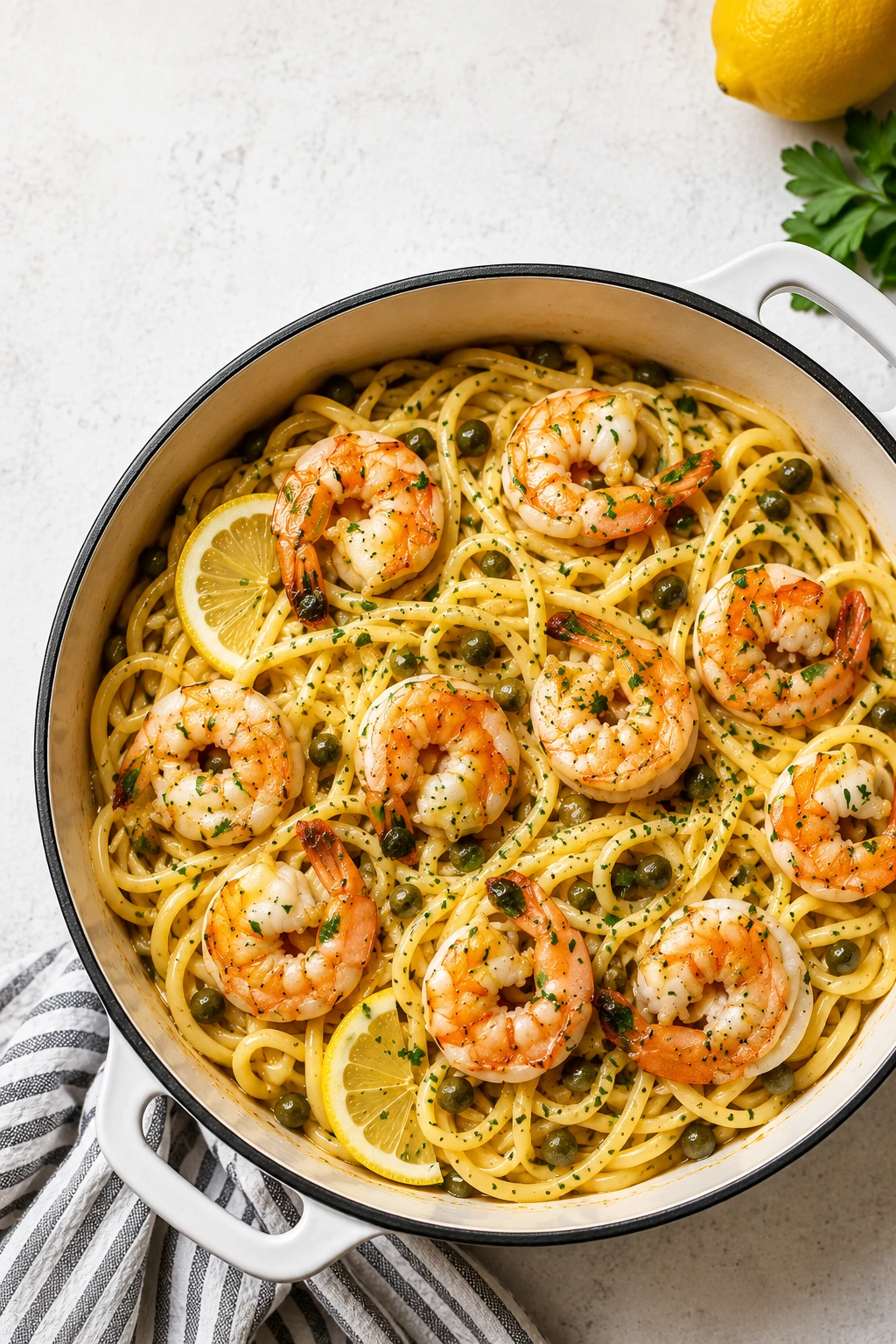
One-pot shrimp piccata pasta takes everything great about classic piccata—bright lemon, briny capers, and a buttery sauce—and turns it into a complete dinner that cooks entirely in a single pot, pasta included. That means no separate pot of boiling water and no extra dishes piling up in the sink.
This recipe is a fantastic choice for beginners because the pasta actually cooks right in the sauce, absorbing all that lemony, garlicky flavor as it softens. There’s no juggling multiple pans, no timing two things at once, and very little room for anything to go wrong.
I love recommending one-pot pasta dishes like this to new cooks because they remove so much of the stress that usually comes with multitasking in the kitchen. In this article, I’ll walk you through exactly how to make one-pot shrimp piccata pasta from start to finish.
Quick Recipe Overview
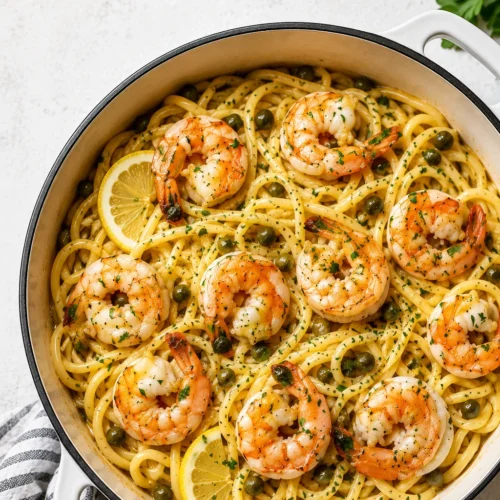
One-Pot Shrimp Piccata Pasta
Ingredients
- 1 lb large shrimp, peeled and deveined
- 12 oz spaghetti or linguine (uncooked)
- 3 tablespoons olive oil, divided
- 4 tablespoons unsalted butter, divided
- 4 garlic cloves, minced
- 4 cups chicken broth
- 1/3 cup fresh lemon juice (about 2–3 lemons)
- 3 tablespoons capers, drained
- Salt and black pepper, to taste
- 1/4 cup grated Parmesan cheese
- Fresh parsley, chopped, for garnish
- Lemon wedges, for serving
Kitchen Equipment
Here’s what you’ll need on hand:
- Large deep skillet or Dutch oven with a lid
- Tongs
- Wooden spoon
- Cutting board and knife
- Meat thermometer (optional)
Step-by-Step Instructions
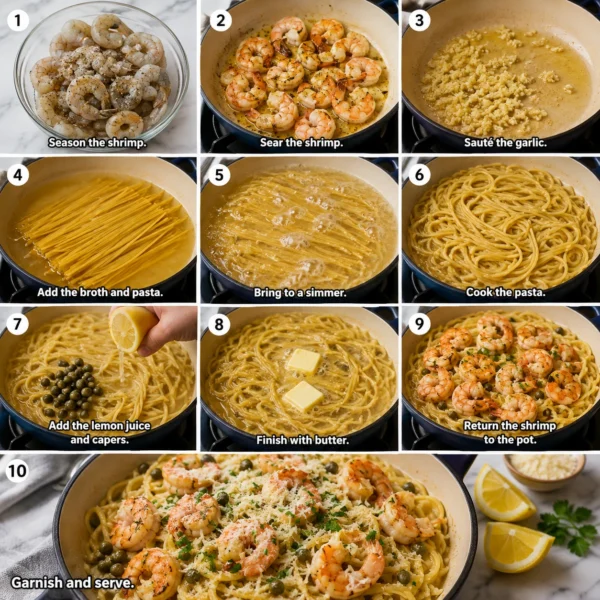
Season the shrimp
Pat the shrimp dry with paper towels and season lightly with salt and pepper.
Sear the shrimp
Heat 2 tablespoons of olive oil in a large deep skillet over medium-high heat. Add the shrimp and cook for 1–2 minutes per side, until just turning pink. Remove and set aside on a plate.
Sauté the garlic
Reduce the heat to medium and add the remaining tablespoon of olive oil along with 1 tablespoon of butter to the same skillet. Add the garlic and cook for 30 seconds, until fragrant.
Add the broth and pasta
Pour in the chicken broth and add the uncooked pasta directly to the skillet, making sure the noodles are mostly submerged in the liquid.
Bring to a simmer
Increase the heat slightly and bring the mixture to a gentle boil.
Cook the pasta
Reduce the heat to low, cover the skillet, and let it simmer for 10–12 minutes, stirring occasionally to prevent sticking, until the pasta is tender and most of the liquid has absorbed.
Add the lemon juice and capers
Stir in the lemon juice and capers, letting everything simmer together for another 2–3 minutes.
Finish with butter
Reduce the heat to low and stir in the remaining butter until the sauce turns glossy and coats the pasta evenly.
Return the shrimp to the pot.
Add the seared shrimp back into the skillet, tossing gently to combine and warm through for 1–2 minutes.
Garnish and serve
Stir in the Parmesan cheese, then top with fresh parsley and serve immediately with extra lemon wedges on the side.
Chef’s Tips
- Sear the shrimp first and set them aside, then add them back at the end so they don’t overcook while the pasta simmers.
- Stir the pasta occasionally while it cooks in the broth to prevent it from clumping together or sticking to the bottom of the pot.
- Add the butter gradually over low heat rather than all at once, which helps create a smooth, glossy sauce instead of a greasy one.
- Taste before adding extra salt, since both the capers and Parmesan cheese already bring a good amount of saltiness to the dish.
Common Mistakes to Avoid
- Adding the shrimp back too early: This leads to overcooked, rubbery shrimp by the time the pasta finishes simmering.
- Not stirring the pasta enough: Since it’s cooking directly in the broth, occasional stirring prevents sticking and uneven cooking.
- Using bottled lemon juice: It results in a flatter, less vibrant sauce compared to fresh lemon juice.
- Adding too much broth at once: Start with the recommended amount and add small splashes only if needed, since too much liquid can leave the dish soupy.
- Skipping the sear on the shrimp: This step adds flavor and a slight golden color that plain simmered shrimp won’t develop.
Variations
- Spicy version: Add a pinch of crushed red pepper flakes to the sauce for some heat.
- Extra vegetable version: Stir in baby spinach or halved cherry tomatoes during the last few minutes of cooking.
- Creamy version: Stir in 1/4 cup of heavy cream along with the butter for a richer, milder sauce.
- Chicken piccata pasta: Swap the shrimp for thin, pan-seared chicken cutlets, sliced and added back at the end.
- Whole wheat version: Use whole wheat pasta for a slightly heartier, higher-fiber take on the dish.
Storage Tips
One-pot shrimp piccata pasta keeps well in an airtight container in the refrigerator for up to 3 days. The sauce may thicken slightly as it chills, which is normal. For longer storage, freeze in a freezer-safe container for up to 2 months, though the shrimp’s texture may soften a bit after thawing. To reheat, warm gently in a skillet over low heat with a splash of chicken broth or water to loosen the sauce back to its original consistency.
Serving Suggestions
One-pot shrimp piccata pasta is satisfying enough to serve on its own, but a simple side salad with a light vinaigrette adds a fresh contrast to the rich, buttery sauce. Garlic bread or a crusty baguette works well for soaking up any extra sauce left on the plate. For drinks, a crisp white wine like Pinot Grigio or Sauvignon Blanc complements the dish’s citrus notes nicely, while sparkling water with lemon makes a great non-alcoholic option. A little extra Parmesan on top never hurts either.
Nutritional Information
| Nutrient | Amount per Serving |
|---|---|
| Calories | approx. 540 kcal |
| Protein | 33 g |
| Carbohydrates | 58 g |
| Fat | 20 g |
| Fiber | 2 g |
Conclusion
One-pot shrimp piccata pasta proves that a bright, restaurant-quality dinner doesn’t need a sink full of dishes to pull off. With the pasta cooking right alongside the shrimp and sauce, this dish comes together in about 30 minutes and delivers all that classic lemon-butter-caper flavor with minimal cleanup.
Give this one-pot shrimp piccata pasta recipe a try at your next dinner, and let me know in the comments how it turned out for you!
Frequently Asked Questions (FAQ)
Can I cook the pasta directly in broth instead of boiling it separately?
Yes, that’s exactly the method used in this one-pot recipe. Cooking pasta directly in chicken broth allows the noodles to absorb extra flavor as they cook, and the starch released helps naturally thicken the sauce. Just be sure to stir occasionally so the pasta doesn’t stick to the bottom of the pot.
Why do I need to sear the shrimp before adding them back at the end?
Searing the shrimp first develops flavor and a slight golden color that you’d miss if they simply simmered in the broth the whole time. Adding them back near the end also prevents overcooking, since shrimp turn tough and rubbery quickly if left in hot liquid for too long.
Can I use a different type of broth for this recipe?
Yes, vegetable broth or seafood stock both work well as substitutes for chicken broth in this dish. Seafood stock in particular can add an extra layer of flavor that pairs nicely with the shrimp, though chicken broth remains a reliable, easy-to-find option for most home cooks.
What’s the best way to prevent the pasta from sticking together in one-pot recipes?
Stirring occasionally while the pasta simmers is the most effective way to prevent sticking, since it keeps the noodles moving and evenly coated in liquid. Using a wide, deep skillet rather than a narrow pot also helps, as it gives the pasta more room to move freely while cooking.
How did your one-pot shrimp piccata pasta turn out? Leave a comment below with your experience, and share this recipe with anyone looking for an easy, low-cleanup dinner idea!