Short Introduction
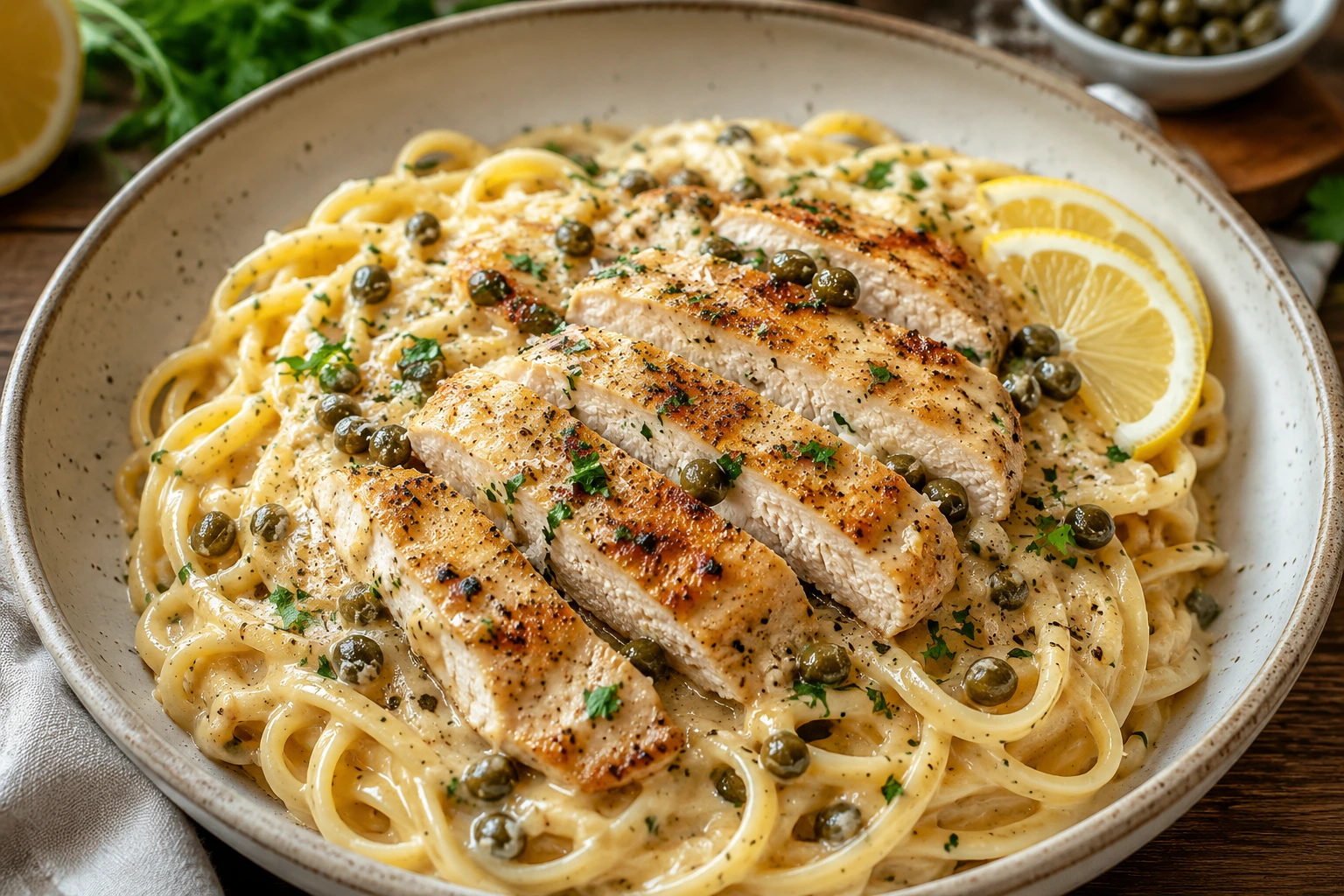
Regular chicken piccata is already a crowd-pleaser, but turning it into creamy chicken piccata pasta takes it to a whole new level. Instead of serving the chicken and sauce on their own, you toss everything together with pasta, letting the noodles soak up every bit of that bright, buttery, lemon-cream sauce.
This dish is especially great for beginners because it combines two familiar comfort foods—pasta and chicken—into one skillet, cutting down on both dishes and stress. There’s no fancy plating required and no delicate sauce that’s easy to ruin. You just build the sauce, add the pasta, and let it all come together.
I’ve made plenty of versions of chicken piccata over the years, and turning it into a creamy pasta dish has become one of my favorite weeknight shortcuts. In this article, I’ll walk you through exactly how to make creamy chicken piccata pasta, step by step.
Quick Recipe Overview
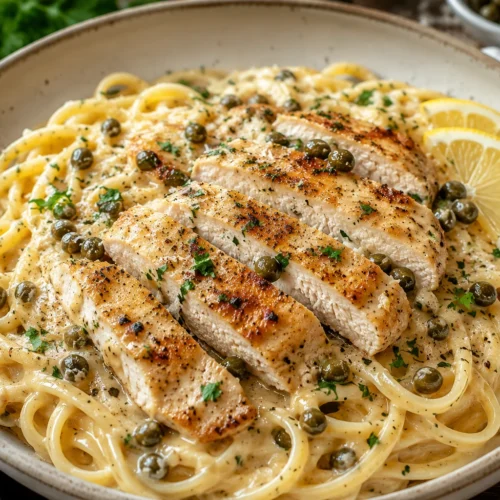
Creamy Chicken Piccata Pasta
Ingredients
- 12 oz spaghetti or linguine
- 2 boneless, skinless chicken breasts, halved horizontally and pounded thin
- 1/2 cup all-purpose flour
- Salt and black pepper, to taste
- 3 tablespoons olive oil
- 3 tablespoons unsalted butter
- 2 garlic cloves, minced
- 1/2 cup chicken broth
- 1/3 cup fresh lemon juice (about 2–3 lemons)
- 1/2 cup heavy cream
- 3 tablespoons capers, drained
- 1/4 cup grated Parmesan cheese
- Fresh parsley, chopped, for garnish
Kitchen Equipment
Here’s what you’ll need on hand:
- Large pot for boiling pasta
- Meat mallet or rolling pin (for pounding chicken)
- Shallow bowl or plate (for flour)
- Large skillet
- Tongs
- Meat thermometer
Step-by-Step Instructions
Cook the pasta
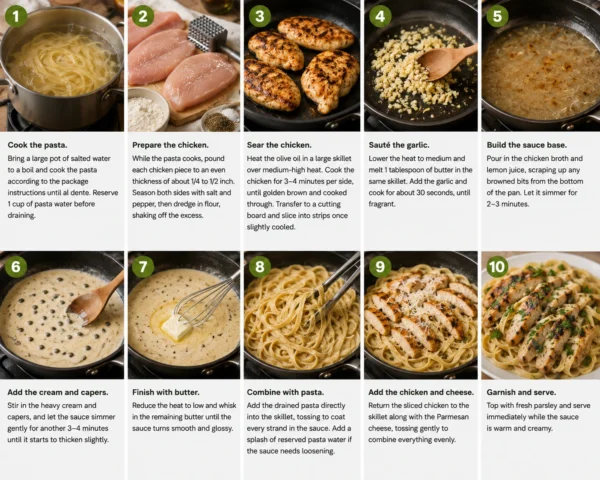
Bring a large pot of salted water to a boil and cook the pasta according to the package instructions until al dente. Reserve 1 cup of pasta water before draining.
Prepare the chicken
While the pasta cooks, pound each chicken piece to an even thickness of about 1/4 to 1/2 inch. Season both sides with salt and pepper, then dredge in flour, shaking off the excess.
Sear the chicken
Heat the olive oil in a large skillet over medium-high heat. Cook the chicken for 3–4 minutes per side, until golden brown and cooked through. Transfer to a cutting board and slice into strips once slightly cooled.
Sauté the garlic
Lower the heat to medium and melt 1 tablespoon of butter in the same skillet. Add the garlic and cook for about 30 seconds, until fragrant.
Build the sauce base
Pour in the chicken broth and lemon juice, scraping up any browned bits from the bottom of the pan. Let it simmer for 2–3 minutes.
Add the cream and capers
Stir in the heavy cream and capers, and let the sauce simmer gently for another 3–4 minutes until it starts to thicken slightly.
Finish with butter
Reduce the heat to low and whisk in the remaining butter until the sauce turns smooth and glossy.
Combine with pasta
Add the drained pasta directly into the skillet, tossing to coat every strand in the sauce. Add a splash of reserved pasta water if the sauce needs loosening.
Add the chicken and cheese
Return the sliced chicken to the skillet along with the Parmesan cheese, tossing gently to combine everything evenly.
Garnish and serve
Top with fresh parsley and serve immediately while the sauce is warm and creamy.
Chef’s Tips
- Reserve some pasta water before draining—it’s the easiest way to adjust the sauce’s consistency without watering down the flavor.
- Slice the chicken after it rests for a few minutes so the juices stay locked in rather than spilling out onto the cutting board.
- Whisk in the butter gradually over low heat to keep the sauce smooth instead of greasy or separated.
- Taste before adding extra salt, since both the capers and Parmesan already bring plenty of saltiness to the dish.
Common Mistakes to Avoid
- Skipping the pasta water reserve: Without it, you have no easy way to thin out the sauce if it becomes too thick.
- Overcooking the pasta before adding it to the sauce: Slightly undercooking it in the pot helps, since it continues to soften once tossed in the hot sauce.
- Adding cream to a pan that’s too hot: This can cause the sauce to separate instead of turning smooth.
- Using bottled lemon juice: It results in a flatter, less vibrant sauce compared to fresh lemon juice.
- Slicing the chicken too soon after cooking: This lets the juices run out, leaving the chicken slightly drier than it should be.
Variations
- Spicy version: Add a pinch of crushed red pepper flakes to the sauce for some heat.
- Extra veggies: Stir in baby spinach or sun-dried tomatoes for added color and flavor.
- Lighter version: Swap the heavy cream for half-and-half or whole milk for a slightly lighter sauce.
- Shrimp piccata pasta: Replace the chicken with sautéed shrimp for a seafood twist on the dish.
- Extra lemony version: Add a bit of lemon zest along with the juice for a more intense citrus flavor.
Storage Tips
Creamy chicken piccata pasta keeps well in an airtight container in the refrigerator for up to 3 days. The sauce may thicken as it chills, which is completely normal. For longer storage, freeze in a freezer-safe container for up to 2 months, though the cream sauce may separate slightly upon thawing. To reheat, warm gently in a skillet over low heat with a splash of milk or broth to bring the sauce back to its original creamy texture.
Serving Suggestions
Creamy chicken piccata pasta is filling enough to stand on its own, but a simple side salad with a light vinaigrette adds a nice fresh contrast to the rich sauce. Garlic bread or a crusty baguette works well for soaking up any extra sauce left on the plate. For drinks, a crisp white wine like Pinot Grigio or Sauvignon Blanc pairs nicely with the dish’s citrus notes, while sparkling water with lemon makes a great non-alcoholic option. A little extra Parmesan on top never hurts either.
Nutritional Information
| Nutrient | Amount per Serving |
|---|---|
| Calories | approx. 590 kcal |
| Protein | 32 g |
| Carbohydrates | 56 g |
| Fat | 26 g |
| Fiber | 2 g |
Conclusion
Creamy chicken piccata pasta takes everything great about classic chicken piccata and turns it into a satisfying, one-pan dinner that’s easy enough for beginners to master. With a little attention to the sauce and some reserved pasta water on hand, this dish comes together quickly without sacrificing that rich, lemony flavor everyone loves.
Give this creamy chicken piccata pasta recipe a try at your next dinner, and let me know in the comments how it turned out for you!
Frequently Asked Questions (FAQ)
Can I make creamy chicken piccata pasta without heavy cream?
Yes, you can substitute half-and-half or whole milk for a lighter version of the sauce, though it won’t be quite as rich or thick. If using milk, consider adding an extra tablespoon of butter at the end to help maintain some of that creamy texture the dish is known for.
Why is reserving pasta water important for this recipe?
Pasta water contains starch that helps loosen and bind the sauce without diluting its flavor the way plain water would. If your sauce turns out thicker than expected after combining it with the pasta, a splash of reserved pasta water quickly brings it back to the right consistency.
Can I use a different pasta shape for this recipe?
Absolutely. While spaghetti and linguine are traditional choices, fettuccine or angel hair also work well since they hold onto the creamy sauce nicely. Short pasta shapes like penne or rotini can work too, though the sauce won’t cling to them in quite the same way as long noodles.
How do I keep the chicken from drying out in this dish?
Pounding the chicken to an even thickness helps it cook quickly and evenly, reducing the risk of overcooking. Letting it rest for a few minutes before slicing also helps retain its juices, and adding it back into the sauce at the end rather than earlier keeps it from drying out further.
How did your creamy chicken piccata pasta turn out? Leave a comment below with your experience, and share this recipe with anyone looking for an easy, comforting one-pan dinner!